Anticuchos
Incomplete allergen information: some ingredients have not been reviewed yet. Always check the labels before cooking.
- Author
- Equipo Cocinoa
- Preparation time
- 4 hr
- Servings
- 4
Summary
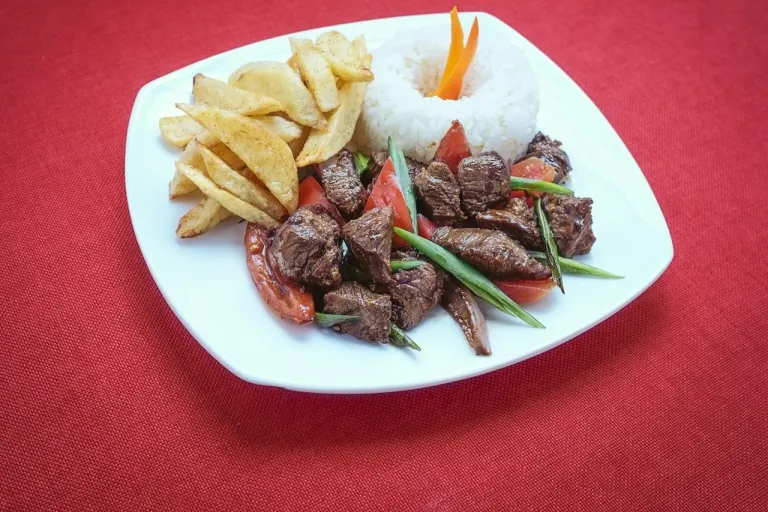
Beef heart skewers marinated in ají panca, vinegar, cumin and garlic, grilled over fierce heat and brushed with their marinade. The Lima street-food classic, with potatoes, choclo corn and ají sauce.
Ingredients
- 6 cloves Garlic (crushed)
- 4 u Potato (medium, yellow-fleshed)
- Salt (for the marinade, the cooking water and the sauce)
- 1 teaspoon Black pepper (ground)
- 5 tablespoons Vegetable Oil (3 for the marinade and 2 for the sauce)
- 1 handful Coriander (or huacatay, chopped, for the sauce)
- 100 ml Red Wine Vinegar
- 2 teaspoons Ground Cumin
- 1 teaspoon Oregano (dried)
- 2 tablespoons Lime juice (for the sauce)
- 2 u Spring Onions (finely chopped, for the sauce)
- 2 u Corn On The Cob (or Peruvian choclo, cut into chunks)
- 3 tablespoons Ají amarillo paste (for the sauce)
- 1 kg Beef heart (whole, about 750 g once trimmed)
- 4 tablespoons Ají panca paste
Instructions
Trim the heart: open it in half and, with a very sharp knife, remove the fat from the top, the remains of veins and valves inside and the white sinews. Then slide the knife under the thin membrane covering it to peel it off, as you would with a loin. Rinse it in cold water, pat it dry and cut it into pieces about 5 × 3 cm and 1 cm thick.
20 min
Make the marinade by mixing the ají panca paste, vinegar, garlic, cumin, oregano crumbled between your fingers, pepper, 3 tablespoons of oil and one and a half teaspoons of salt in a bowl. Mix the meat well with the marinade, cover the bowl and leave in the fridge for at least 3 hours, or until the next day if you can.
3 hr
If you are using wooden or cane skewers, soak them in water for half an hour so they don't burn. Meanwhile, boil the potatoes in their skins in salted water until a knife slides in easily and, in another pan, cook the corn until the kernels are tender. Peel the potatoes and cut them into thick slices.
30 min
For the sauce, mix the ají amarillo paste with 2 tablespoons of oil, the lime juice and a pinch of salt until creamy, then stir in the chopped spring onion and coriander.
5 min
Thread 3 or 4 pieces of heart onto each skewer, piercing them through the centre and packing them closely together. Keep the marinade left in the bowl for basting.
10 min
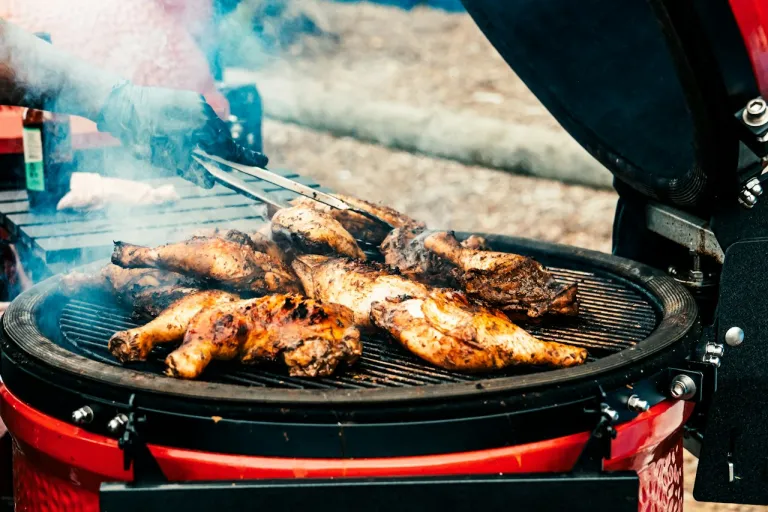
Heat a charcoal grill, griddle or cast-iron pan until very hot. Grill the skewers for 2 to 3 minutes on each side, brushing them with the marinade when they go on and again when you turn them, until well charred outside and still juicy and pink inside. If there is room, brown the potato slices on the griddle too.
10 min
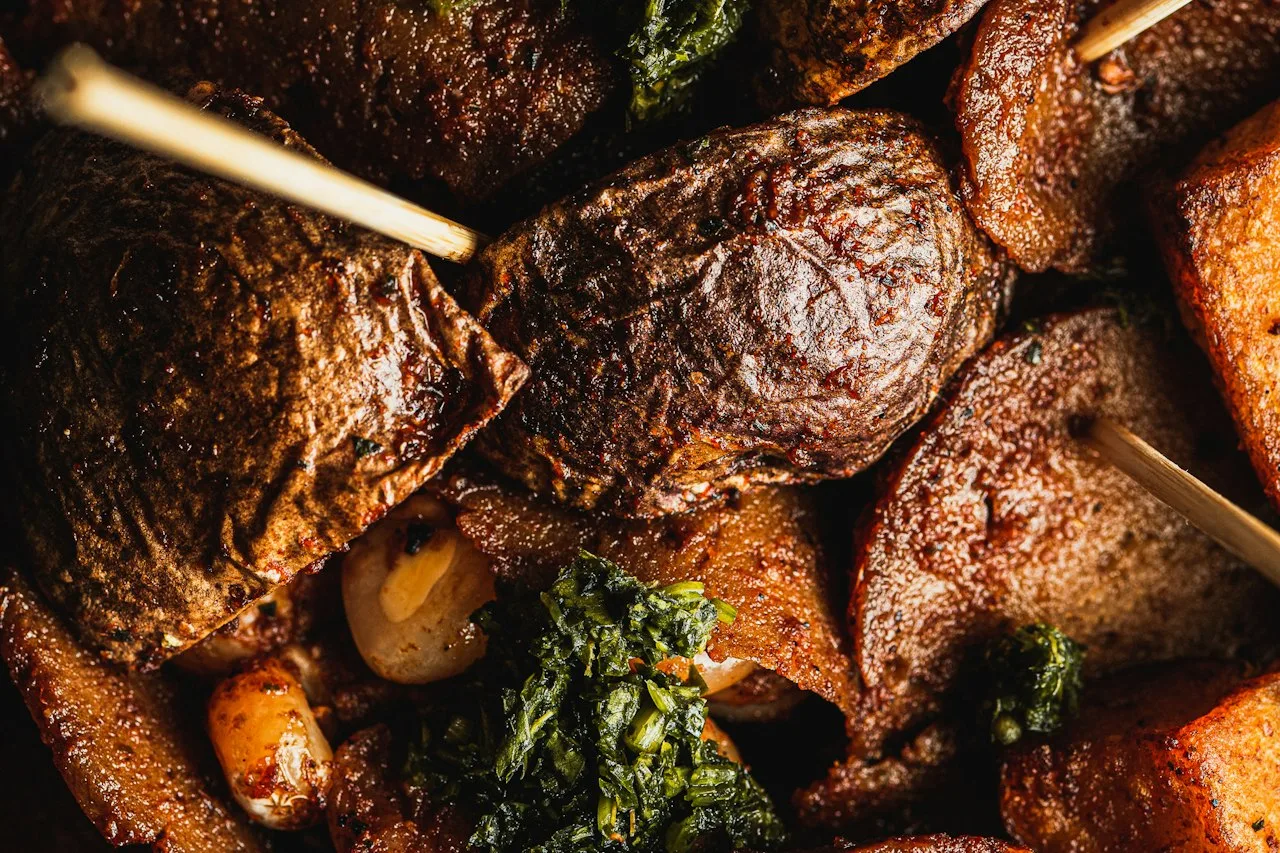
Serve the skewers straight away, each with a piece of potato on the tip if you want them the Lima way, with the rest of the potatoes, the corn and the ají sauce on the side.
Notes
Pieces of meat were already being threaded and grilled in the Andes before the Spanish arrived, but the anticucho as it is eaten today is the work of Afro-Peruvian cooks in colonial times, who made the most of beef heart, a cut then considered of little value. Today it is sold at dusk from carts and stalls all over Lima, amid the smoke of the grills. Heart is a lean, firm muscle that tastes much like a good steak, and there is nothing to fear: the secret is to trim it well and not overcook it, as a few minutes too long make it tough. Ask your butcher for a veal or beef heart and to open it up for you; once trimmed it loses nearly a quarter of its weight. If you can't find one, the recipe works with beef fillet or rump in large cubes, though the result is milder. Ají panca paste, made from a smoky, mild dried chilli, is sold in Latin American shops; you can replace it with 3 dried ají panca chillies soaked in hot water and blended. Peruvians baste the skewers with a brush made of tied corn husks and turn them only once. Stop basting for the last minute so that the marinade that has touched the raw meat gets cooked. For the sauce, the traditional herb is huacatay, a Peruvian relative of marigold; outside Peru, coriander is the usual substitute.
More information
Guide indicatorsDifficulty, quality and data reliability
Guide indicators
- Estimated difficulty68/100
- Recipe completeness60/100
- Nutrition reliability
- Medium
Calculated automatically from the ingredients, steps, time and community feedback. They are not a guarantee.
StoragePeruvian
I made this
Have you made it? Tell us how it went.
Community versions
Would you change something? Publish your version: it will link back to this recipe.
Comments
Log in to leave a comment.
No comments yet
Be the first to comment on this recipe.