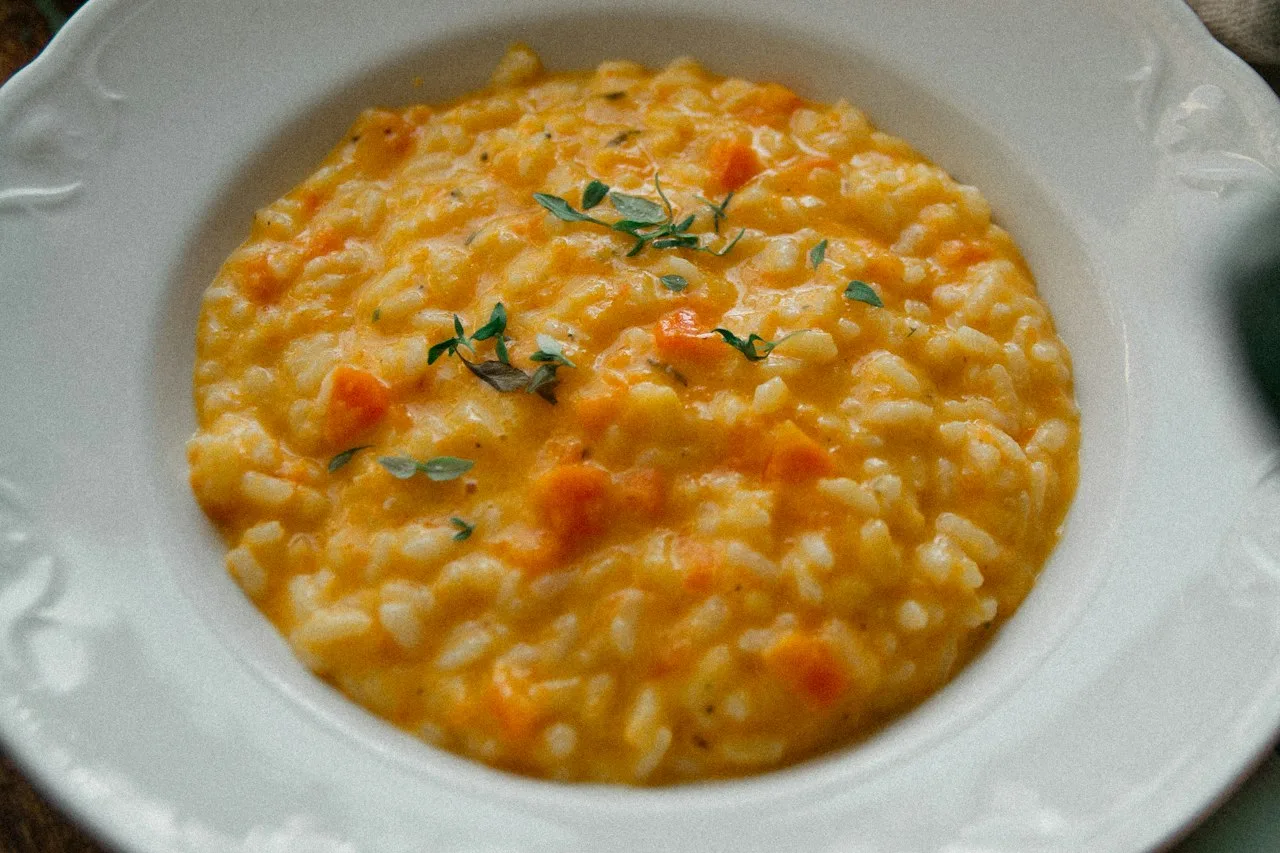
Butternut squash risotto
Risotto de calabaza
Contains allergens
Incomplete allergen information: some ingredients have not been reviewed yet. Always check the labels before cooking.
- Author
- Equipo Cocinoa
- Preparation time
- 81 min
- Servings
- 4
Summary
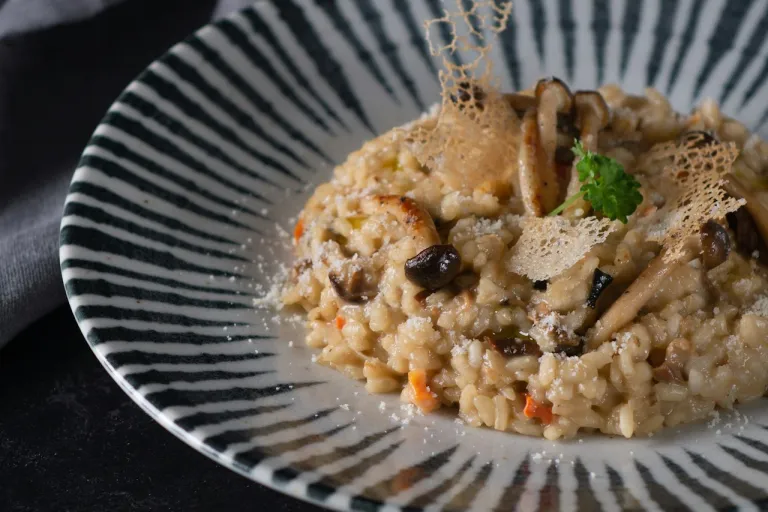
A creamy, deep orange risotto: half the squash melts into the soffritto and blends with the rice, while the other half is roasted in cubes and scattered on top with thyme. Finished with butter and Parmesan, as in northern Italy.
Ingredients
- 320 g Rice (risotto rice (carnaroli or arborio))
- 50 g Butter (cold, diced: 15 g for the sage and the rest for the mantecatura)
- 1 u Onion (small, very finely chopped)
- Salt (to taste)
- Black pepper (freshly ground, to taste)
- 3 tablespoons Extra Virgin Olive Oil (1 for roasting the squash and 2 for the soffritto)
- 4 sprigs Thyme (fresh)
- 1.2 l Vegetable Stock (homemade or gluten-free shop-bought, hot)
- 1 pinch Nutmeg (freshly grated) (optional)
- 60 g Parmesan (Parmigiano Reggiano, grated)
- 100 ml Dry White Wine
- 8 leaves sage (fresh) (optional)
- 900 g Butternut Squash (or Mantua pumpkin, about 700 g once peeled and deseeded)
Instructions
Preheat the oven to 200 °C. Peel the squash, scoop out the seeds and fibres and dice it: half into 1.5 cm cubes for roasting and the other half smaller, into 1 cm dice, for the soffritto.
10 min
Toss the larger cubes with 1 tablespoon of oil, a pinch of salt and the leaves from 2 sprigs of thyme. Spread them out on a tray lined with baking paper and roast until tender and browned at the edges, turning them once.
25 min
Meanwhile, heat the stock in a saucepan and keep it at the barest simmer.
5 min
In a wide, heavy-based pan, heat 2 tablespoons of oil and soften the onion over a low heat without letting it colour. Add the small squash dice and a ladle of stock, cover and cook until the squash falls apart when pressed. Uncover, mash it with a wooden spoon into a coarse purée and let almost all the liquid evaporate.
16 min
Add the rice and stir for a couple of minutes so it is coated and heated through. Pour in the wine and let it evaporate until it no longer smells of alcohol.
3 min
Add the hot stock a ladleful at a time, stirring often and waiting for the rice to absorb it before adding the next. Halfway through, taste and season lightly with salt. The rice is ready when it is tender but still firm at the centre and the risotto is loose enough to ripple like a wave when you shake the pan.
17 min
While the rice finishes cooking, melt 15 g of butter in a small frying pan and fry the sage leaves until crisp. Drain on kitchen paper.
2 min
Take the pan off the heat. Add the remaining cold butter, the Parmesan and the nutmeg and beat hard with the wooden spoon until the risotto is glossy and creamy (this is the mantecatura). If it has turned out thick, loosen it with a splash of stock. Cover and leave to rest for 2 minutes.
3 min
Serve the risotto on flat plates, tapping the base of each plate so it spreads out. Scatter over the roasted squash, the crisp sage and a few thyme leaves, and finish with freshly ground pepper.
Notes
In Lombardy and the Veneto squash is the queen of autumn, and Mantua is proud of its own: the zucca mantovana, with dry, sweet, orange flesh, which also fills tortelli di zucca along with amaretti and mostarda. Outside Italy, butternut squash is the best alternative, as it is sweet, not stringy and easy to peel; any firm-fleshed winter squash or pumpkin will also do. Squash is harvested at the end of summer and into autumn, and in October and November, after a few weeks of curing, it is at its sweetest. Choose one that feels very heavy for its size, with hard skin, no bruises or soft patches and a dry, woody stalk, a sign that it ripened on the plant. The trick for the colour is to cook half of it in the soffritto until it falls apart: it tints the rice and makes it creamy, while the roasted half adds whole mouthfuls and a toasty note. Use carnaroli or arborio rice, which release starch, and keep the stock hot at all times. Check the salt towards the end, as the Parmesan is salty. Parmigiano Reggiano is made with animal rennet: for a vegetarian version, use a hard cheese made with vegetarian rennet. If you are avoiding gluten, check the label on shop-bought stock. Risotto does not like waiting; if there is any left over, cool it quickly, refrigerate it and eat it the next day, thoroughly reheated or turned into arancini.
More information
Guide indicatorsDifficulty, quality and data reliability
Guide indicators
- Estimated difficulty56/100
- Recipe completeness60/100
- Nutrition reliability
- Medium
Calculated automatically from the ingredients, steps, time and community feedback. They are not a guarantee.
StorageKeeps 1 day in the fridge
I made this
Have you made it? Tell us how it went.
Community versions
Would you change something? Publish your version: it will link back to this recipe.
Comments
Log in to leave a comment.
No comments yet
Be the first to comment on this recipe.