Batch cooking and leftovers
Freezing and defrosting properly: what freezes well, how to pack it and how long it keeps
Which foods hold up well in the freezer and which don't, how to pack and label, rough storage times and the safe ways to defrost.
By Equipo Cocinoa · 2026-10-23
The freezer is your best ally for cooking once and eating several times, making the most of special offers and not throwing food away. But it pays to know what it does and what it doesn't: cold stops microorganisms from growing, it doesn't kill them, and it doesn't improve food either. What goes in in good condition comes out in good condition; what goes in on its last legs comes out on its last legs.
The basics: −18 °C and fast freezing
- Temperature: your freezer should be at −18 °C or lower. If it has no display, a freezer thermometer is cheap and settles the question.
- Freeze early. Meat, fish and leftovers should be frozen while they're fresh, not on the day they were about to go off.
- Cool cooked food first. Don't put hot food in the freezer: it warms everything around it. Let it cool in the fridge and freeze it the same day.
- Small, flat portions. The faster food freezes, the smaller the ice crystals and the better it keeps its texture. A three-litre block takes far longer than three flat one-litre bags.
What freezes well
- Stews, cooked pulses in their liquid, puréed vegetable soups, tomato sauces, sofrito and stocks.
- Raw meat and fish, well wrapped.
- Meatballs, croquetas and empanadillas (small pasties), raw or cooked.
- Bread, ideally sliced: it goes straight into the toaster.
- Chopped fruit for smoothies, compotes or sponge cakes.
- Blanched vegetables (more on this below).
- Grated cheese, butter, and chopped herbs in an ice-cube tray with a little water or oil.
What doesn't freeze well
It isn't dangerous, but the texture changes so much that it isn't worth it:
- Lettuce, cucumber, radishes and salad tomatoes. They hold so much water that they go limp when they thaw. Frozen tomatoes are fine for sauces, though.
- Eggs in their shells, which can burst, and whole hard-boiled eggs, whose whites turn rubbery. Raw egg whites, on the other hand, freeze very well.
- Mayonnaise and emulsified sauces, which split.
- Chunks of cooked potato in a stew, which turn floury and spongy. If you plan to freeze a stew, you can cook the potatoes separately on the day you eat it.
- Cream, yoghurt and very light dairy-based sauces, which can separate. If you make a soup to freeze, add the cream or cheese when you reheat it.
- Battered and fried food, which loses its crunch.
- Rice and pasta in soups, which go soggy. Better to freeze the broth and cook them fresh.
Packing to prevent freezer burn
The whitish, dried-out patches you sometimes see on frozen food are freezer burn: air has dried out the surface. It isn't dangerous, but that part tastes of very little and turns leathery. To avoid it:
- Use freezer bags and squeeze out as much air as you can before sealing them. A trick: lower the open bag into a container of water, without letting any water in, and seal it below the surface.
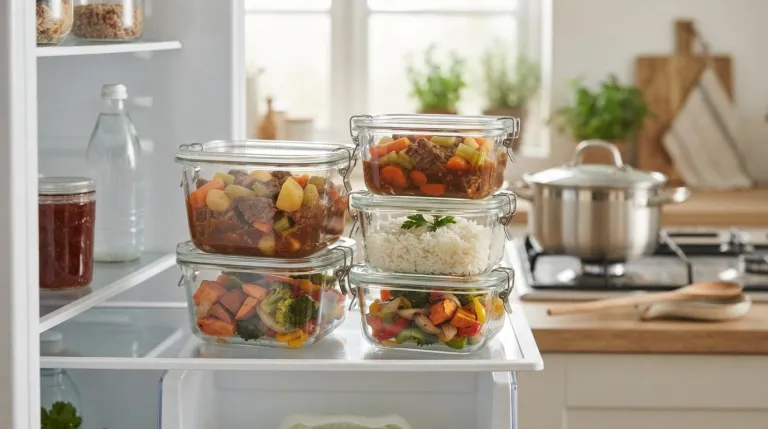
- With containers, choose freezer-safe ones that are just the right size. For sauces and soups you can press cling film onto the surface.
- Separate steaks, burgers or chicken breasts with baking paper so you can take out only the ones you need.
- With liquids, leave about 2 cm of headspace: they expand as they freeze.
- Freeze bags flat on a tray and, once they're solid, store them upright like books.
Label everything
What isn't labelled gets forgotten. Write on every container what it is, how many portions it holds and the date. A strip of masking tape and a marker pen are all you need. If you also keep a list on the freezer door of what's inside, you'll know what you have without opening it and you'll use up the oldest things first.
How long it keeps
At −18 °C food stays safe for a long time, but its quality slowly declines: it dries out, loses aroma and the fat turns rancid. These are rough guidelines for keeping good quality:
- Stews, soups and other cooked dishes: 2 to 3 months.
- Stocks: about 3 months.
- Raw minced meat: 3 to 4 months.
- Raw steaks and joints: 4 to 6 months; large cuts of beef keep a little longer.
- Raw chicken pieces: up to 9 months.
- Raw white fish: about 6 months. Oily fish: 2 to 3 months, because its fat turns rancid sooner.
- Bread: about 3 months.
- Blanched vegetables: 8 to 12 months.
After that, food doesn't become dangerous in itself, but it will probably taste worse.
Blanching vegetables
Most vegetables keep better if you blanch them before freezing: a few minutes in boiling water slows down the enzymes that make them lose colour, flavour and texture. Cook them for 1 to 3 minutes depending on size (spinach, 1 minute; green beans or broccoli florets, 2 or 3), plunge them into iced water, drain them very well and freeze them spread out on a tray before bagging them. That way they don't stick together. Peppers and onions for cooking can be frozen raw, chopped.
Fish to eat raw or lightly cooked
If you're going to prepare raw, marinated or lightly cooked fish, such as boquerones en vinagre (fresh anchovies marinated in vinegar), a ceviche or a tartare, you need to freeze it first to eliminate the risk of anisakis. For home freezers, AESAN (the Spanish food safety agency) advises keeping it at −15 °C or lower for at least 5 days from the moment it goes in; a domestic freezer at −18 °C meets that condition. If you're not sure yours gets that cold, buy the fish already frozen. The recipe for boquerones en vinagre walks you through the whole process.
Defrosting: the three safe ways
- In the fridge. This is the best way. It takes some forward planning: about 12 hours for small portions and 24 hours or more for large pieces. Put the food in a deep plate or a container on the bottom shelf, so the liquid doesn't drip onto other food. Raw meat and fish defrosted this way should be cooked within one or two days.
- In cold water. In a well-sealed bag, submerged in cold water that you change every 30 minutes. A portion of meat or fish takes one to two hours. Cook it straight away.
- In the microwave, using the defrost setting. Some parts start to warm up, so it has to be cooked immediately.
What you shouldn't do is leave it on the worktop or hold it under the hot tap: the surface spends hours at room temperature while the centre is still frozen.
Many things don't even need defrosting: vegetables, soups and stews can be heated straight from frozen over a low heat, and croquetas or empanadillas can be fried or baked from frozen. Thin steaks can also go straight into the frying pan, with a little extra time; large pieces, on the other hand, end up cooked on the outside and raw in the middle.
The golden rule: don't refreeze raw food
- Anything you've defrosted raw doesn't go back into the freezer as it is. Cook it, and then you can freeze the finished dish: for example, defrosted mince turned into meatballs in sauce.
- Cooked food you've defrosted should be eaten within one or two days and not refrozen.
- If there's a power cut, keep the door shut: a full freezer stays cold for quite a few hours. If you don't know how long something has been thawed, the sensible thing is to throw it away.
Common mistakes and how to fix them
- Freezing everything in one block. Then you have to defrost the whole lot. Freeze portions of what you eat in one go.
- Containers with no name or date. You end up with mysterious "brown things" at the back. Always label.
- Freezing food that was already on its way out. The cold won't fix it. Freeze while it's still fresh.
- Bags full of air. Freezer burn and off flavours. Squeeze the air out or use containers that are just the right size.
- Defrosting on the worktop. Plan the day before and leave the food in the fridge.
Putting it into practice
Well-made leftovers are the best use of a freezer. If you want to go further, cook once, eat twice explains how to cool and reheat leftovers safely. And two recipes that freeze beautifully:
- Meatballs in sauce.
- Pumpkin soup, without the cream, which goes in when you reheat it.
For information only. It does not replace advice from a health professional.