Cooking techniques
Homemade stocks and broths: chicken, vegetable and fish
Which bones and vegetables to use, how long to simmer each stock, how to skim off the fat and how to freeze it in portions so you always have some to hand.
By Equipo Cocinoa · 2026-10-23
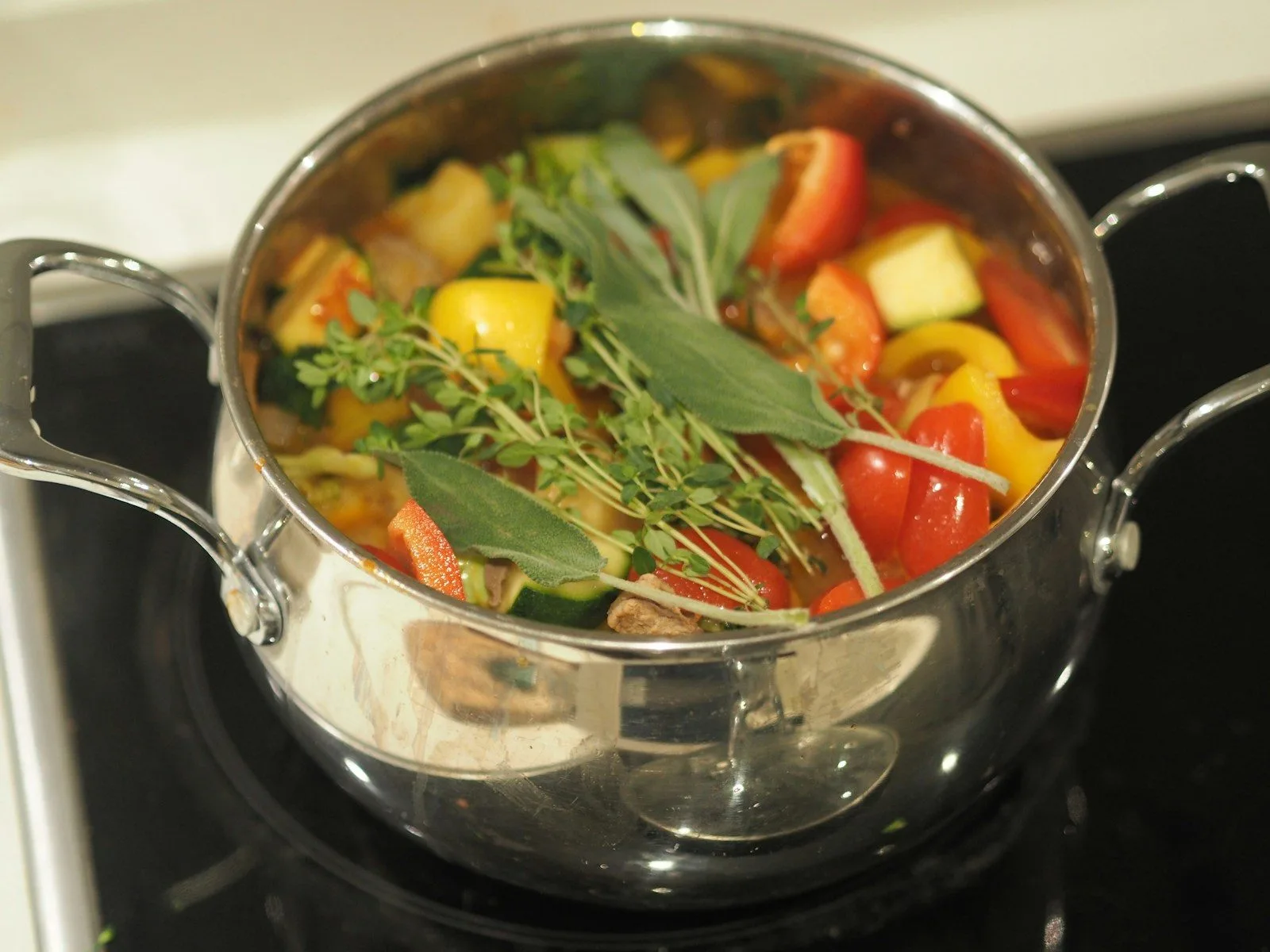
A homemade stock transforms a rice dish, a soup or a stew, and it also makes use of bones, fish frames and trimmings that would otherwise end up in the bin. It doesn't call for any complicated technique, just time over a very low heat and a little organisation to store it. This guide covers the three most useful stocks in a home kitchen.
Broth and stock: not the same thing
- Broth: it is seasoned and ready to drink on its own or to use as the base of a soup.
- Stock: it is a neutral base, with no salt or very little, meant for cooking with: adding to a rice dish, making a sauce or reducing. If you salt a stock and then reduce it by half, the salt becomes concentrated and the dish ends up salty.
If you are making stock to keep in the freezer, the most practical approach is to make it like a stock, with little salt, and adjust the seasoning when you use it. There is also white stock, made with bones that haven't been browned, and brown stock, made with bones and vegetables roasted first, which gives more colour and a more toasted flavour.
The rules that apply to all of them
- Start with cold water. The flavours come out gradually and the scum forms at the beginning, when it is easy to remove.
- A very low heat. The surface should barely move. If it boils hard, the fat mixes into the liquid and the stock ends up cloudy and greasy-tasting.
- Skim off the scum with a slotted spoon during the first 20 or 30 minutes.
- No lid, or the lid left ajar, so it concentrates a little.
- Little or no salt, as we have seen.
- Strain through a fine sieve. If you want it really clear, line the sieve with a clean cotton cloth and don't press the solids.
Chicken stock
For about 2 litres:
- 1 to 1.5 kg of chicken carcasses, wings, necks or bones (with a boiling hen it is more flavourful).
- 2.5 to 3 litres of cold water.
- 1 onion, 1 carrot, 1 leek and 1 celery stick, in large pieces.
- A few peppercorns, a bay leaf and some parsley stalks.
Put the bones in the pot with the cold water and bring to the boil. Skim off the scum, add the vegetables and leave to simmer over a very low heat for 2 to 3 hours. In a pressure cooker, about 45 minutes to 1 hour from when the valve rises.
If you want a clearer stock, blanch the bones first: boil them for 2 or 3 minutes, throw away that water, rinse them and start again with fresh water. And if you are after a brown stock, roast the bones and vegetables in the oven at 200–220 °C for 30–45 minutes, until they are well browned, then loosen whatever has stuck to the tray with a little water: there is a lot of flavour there.
A good sign: if the stock sets to a jelly as it cools in the fridge, the bones and cartilage have released their collagen. When you heat it, it turns liquid again.
Vegetable stock
This is the quickest and the one that makes the best use of trimmings. These work very well:
- onion (with a little of the skin, which adds colour), carrot, leek (the green part too), celery, tomato, mushrooms and parsley stalks.
Best avoided or used sparingly:
- cabbage, broccoli and cauliflower, which give a strong, sulphurous flavour;
- beetroot, which stains everything;
- potato, which makes it cloudy, although that doesn't matter if it is for a soup.
With 1 kg of vegetables to about 2 litres of water, 45 minutes to 1 hour of gentle simmering is enough. Longer doesn't improve it: the vegetables lose their freshness and the stock can turn bitter. If you brown them first in a little oil, the result is more intense.
A useful habit: keep a bag in the freezer for the clean tips, stalks and peelings left over from your cooking. When it is full, you have the makings of a stock.
Fish stock
Fish stock, or fumet, is the most delicate and the quickest:
- Use the bones and heads of white fish: hake, monkfish, megrim, scorpion fish or sea bass. Avoid oily fish such as sardines, mackerel or salmon, because they bring a very strong flavour and a lot of fat.
- Remove the gills and wash away any traces of blood thoroughly: they are what makes it bitter. Leaving the bones in cold water for 10 minutes helps.
- Allow 1 kg of bones and heads for every 2 litres of water, with onion, leek and a few parsley stalks.
- Don't go beyond 20–30 minutes of gentle simmering. Any longer makes it bitter and cloudy.
For seafood rice dishes, you can first fry the heads and shells of prawns or king prawns in the pot, crushing them with the spoon, and then add everything else. That reddish stock is packed with flavour.
Removing the fat
- Cold: this is the easiest way. Leave the strained stock in the fridge overnight; the fat sets on the surface and can be lifted off with a spoon.
- Hot: tilt the pot slightly and collect the fat that gathers on one side with a ladle. Quickly drawing a sheet of kitchen paper across the surface picks up whatever is left.
Cooling and storing safely
A large pot of stock takes a long time to cool, and it shouldn't sit around lukewarm for hours. Divide it between small containers or stand the pot in a bath of iced water, stirring from time to time. Put it in the fridge as soon as it stops steaming, and always within two hours.
- In the fridge: chicken or vegetable stock, 3 to 4 days; fish stock, 1 to 2 days.
- In the freezer: about 3 months at good quality.
To freeze it in useful portions:
- Ice-cube tray: for when you only need a little for a sauce or a stir-fry.
- 250 and 500 ml containers: the usual amount for a rice dish or a soup.
- Flat bags: they stack upright and thaw quickly.
Always leave about 2 cm of space, because liquid expands as it freezes, and label each container with the type of stock and the date. If you are short of space, reduce the stock by half before freezing it and note on the label that it is concentrated. When you use it, heat it until it boils.
Common mistakes and how to fix them
- It has turned out cloudy. It boiled too hard. It is still perfectly good; if the appearance matters to you, strain it through a cloth.
- It tastes of nothing. There were too few ingredients for so much water. Reduce it, uncovered, until you like it.
- The fish stock is bitter. It cooked for too long or there were gills in the pot. Next time, 25 minutes and well-cleaned trimmings.
- It is too salty after reducing. Let it down with water and, next time, add the salt at the end.
Recipes to practise with
- Arroz a banda, where the fish stock is the star.
- Caldo gallego, a comforting Galician soup to eat with a spoon.
- Escudella i carn d'olla, which gives you a broth and a meal at the same time.
- Castilian garlic soup, to make the most of a good stock and day-old bread.
For information only. It does not replace advice from a health professional.
More posts
Cooking techniques
Pulses from start to finish: soaking, cooking and storing
How long to soak each pulse, how long to cook it in an ordinary pot or a pressure cooker, when to add the salt and how to store it so it lasts all week.
Equipo Cocinoa · 2026-10-23
Cooking techniques
Sofrito: how to get the foundation of Spanish cooking right
Timing, heat and the order of the ingredients for a sofrito that really brings flavour: softened or caramelised onion, well-reduced tomato and how to store it.
Equipo Cocinoa · 2026-10-23
Cooking techniques
Dry, creamy or soupy rice: ratios, timings and common mistakes
Which variety to choose, how much stock each style of rice needs, paella pan or casserole, how to get the socarrat and how to store leftover rice safely.
Equipo Cocinoa · 2026-10-23