Cooking techniques
Dry, creamy or soupy rice: ratios, timings and common mistakes
Which variety to choose, how much stock each style of rice needs, paella pan or casserole, how to get the socarrat and how to store leftover rice safely.
By Equipo Cocinoa · 2026-10-23
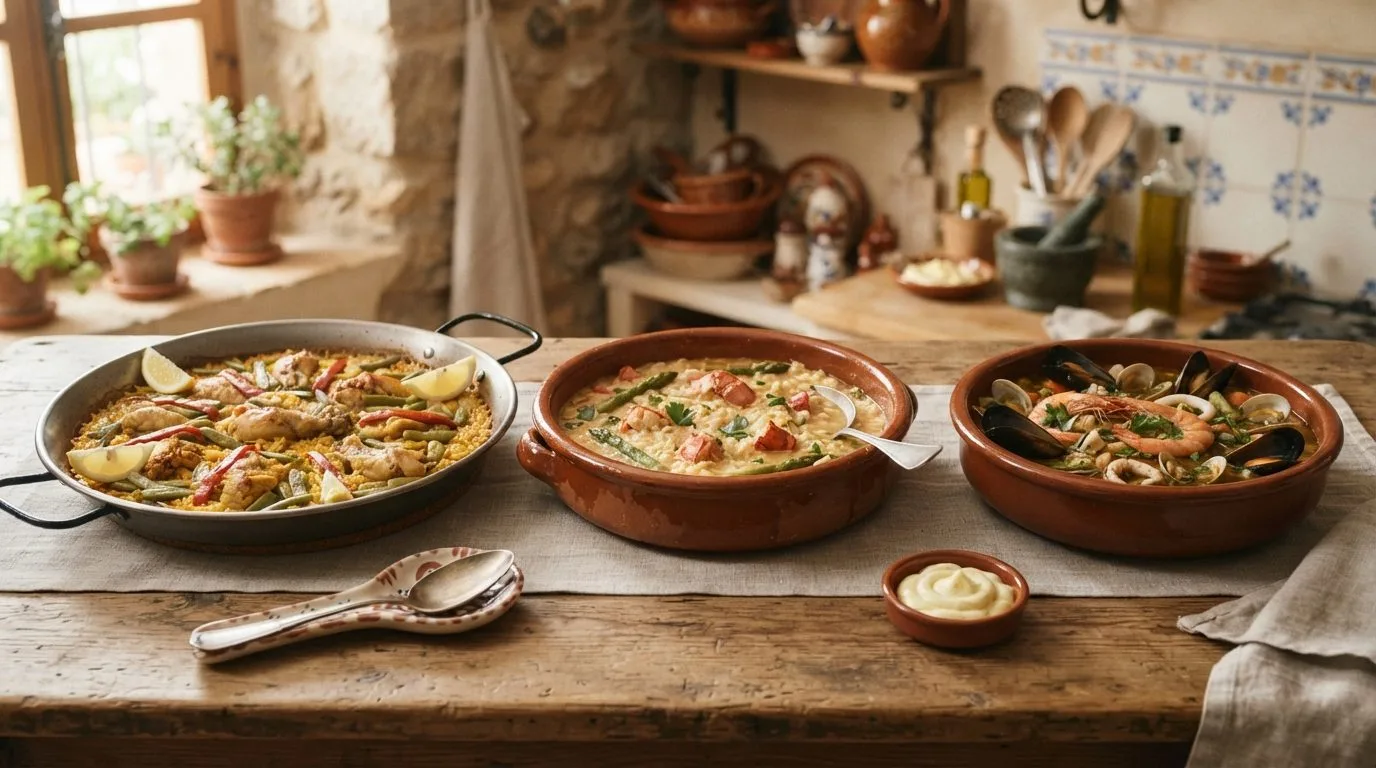
Good rice doesn't depend on a family secret, but on a handful of well-made decisions: which grain to use, how much stock to add, which pan to cook it in and when to stop touching it. This guide will help you get the three great styles of Spanish rice cooking right.
Dry, creamy and soupy: how they differ
- Dry (seco): the grains stay separate and whole, with no visible liquid when served. It is cooked in a thin layer, usually in a paella pan. Paella, arroz a banda and arroz negro are all dry rice dishes.
- Creamy (meloso): the grains stay juicy and coated in a thick, silky broth, almost like a cream. It is served in a deep plate and eaten straight away.
- Soupy (caldoso): the rice swims in broth, like a thick soup. It is eaten with a spoon and is the easiest to nail in a home kitchen.
Which rice to choose
All three styles use round or medium-grain rice, which soaks up the flavour of the stock very well. Within that family there are differences worth knowing:
- Bomba: absorbs a lot of liquid without splitting, and the grains stay whole and separate. It is quite forgiving of mistakes in quantity and timing, which makes it a very good choice when you are starting out with dry rice dishes. It needs a little more stock and one or two minutes' more cooking.
- Senia, bahía, albufera and similar: very flavourful and creamier, but they overcook more easily. They are ideal for creamy and soupy rice; in dry dishes they need more attention.
- Round rice with no variety stated: works well at home; use the times on the packet as a guide.
Long-grain rice is excellent as a side dish, but it doesn't give the result you are after in these dishes. And don't wash the rice: the starch on the surface helps to bind the stock, especially in creamy rice.
How much stock to use
Allow between 80 and 100 g of rice per serving. For the stock, these ratios of rice by weight to stock by volume are a good starting point:
- Dry: 2.5 to 3 times the weight of the rice. For 400 g, between 1 and 1.2 litres of stock. With bomba you can go up to 3.5.
- Creamy: about 4 times. For 400 g, around 1.6 litres, with some hot stock in reserve.
- Soupy: 5 to 6 times. For 400 g, between 2 and 2.4 litres.
These are guidelines, not laws: the size of the pan, the power of the burner and how much your kitchen evaporates all change the sums. When a rice dish turns out well, write down the quantities and the pan you used. In a paella pan, a classic rule of thumb is that the stock should reach the rivets of the handles just before you add the rice.
The stock must be hot when the rice goes in and flavourful and lightly salted: this is your last chance to adjust the salt, because after that the grains absorb everything. If you don't have homemade stock, our guide to homemade stocks and broths explains how to make it and freeze it.
Paella pan or casserole
- Paella pan: wide, shallow and made of thin metal, so the stock evaporates evenly. The layer of rice should be thin, one or two centimetres. For four servings (about 400 g of rice), a 38 to 42 cm paella pan works well. The heat should cover the whole base; if your burner is smaller than the pan, turn it every few minutes so that it isn't only the centre that cooks.
- Earthenware or heavy-based casserole: holds a lot of heat and keeps cooking off the hob. It is perfect for creamy and soupy rice and for oven-baked rice dishes.
- Pot: for soupy rice, any wide pot will do.
Step by step: a dry rice dish
- Brown the meat, fish or vegetables in the paella pan with oil and push them to the edges.
- Make the sofrito in the centre. If you want to fine-tune it, our guide to sofrito has the timings.
- Add the rice and stir it for a minute so it is coated in fat and flavour.
- Pour in the hot stock, spread the rice out evenly and from this point on, don't stir it. Stirring releases starch and the rice turns gluey.
- Cook for 8 to 10 minutes over a high heat and another 8 to 10 over a medium-low heat, until the stock has evaporated and small holes appear on the surface.
- If you want socarrat, now is the time (see below).
- Let the rice rest for 3 to 5 minutes off the heat, covered with a clean tea towel or kitchen paper, so the grains can finish settling.
Creamy and soupy rice: a different logic
Creamy rice is stirred now and then, gently, so the starch binds the stock. Keep adding hot stock if it dries out too soon and take it off the heat while the grains still have a little bite, because they will carry on cooking. It needs between 16 and 18 minutes and it won't wait: served ten minutes late, it turns stodgy.
In soupy rice, the grains keep absorbing stock on the plate. Turn off the heat one or two minutes before it is quite ready and serve it immediately, with plenty of broth.
The socarrat
Socarrat is the thin layer of toasted, crispy rice that sticks to the bottom of a dry paella. To get it:
- At the end of cooking, once the stock has evaporated, turn up the heat for 1 or 2 minutes.
- Listen: the bottom will start to crackle.
- Smell: it should smell toasted, not burnt. If you notice a burning smell, take the pan off the heat at once.
- Check at one edge with a spoon that the crust has formed.
It only makes sense in dry rice dishes: creamy and soupy rice have no socarrat.
Common mistakes and how to fix them
- Hard on top and overcooked underneath. Uneven heat or barely enough stock. Sprinkle the hard patches with a little hot stock and cover the pan with foil or a tea towel for a few minutes.
- Gluey. A dry rice dish was stirred, there was too much stock or the variety overcooked. Next time, less stock and no spoon.
- Bland. The stock wasn't seasoned properly. If you notice at the start, dissolve some salt in a little hot stock and spread it around; at the end there is no fixing it.
- Layer too thick. Too much rice for the size of the pan. The rice at the bottom overcooks and the rice on top stays raw: match the quantity to the pan.
- Rubbery seafood. Prawns and squid cook in a few minutes. Brown them at the start, lift them out and put them back on top at the end.
Leftover rice, with care
Cooked rice deserves special attention. It can contain spores of a bacterium (Bacillus cereus) that survive cooking and, if the rice is left for hours at room temperature, produce toxins that reheating doesn't destroy. So:
- Cool leftovers quickly, spread out in a shallow container.
- Put them in the fridge as soon as they stop steaming: ideally within the first hour and never more than two.
- Eat them within 24 hours.
- Reheat them until they are steaming hot all the way through, and only once.
The simplest thing is to cook just the right amount: freshly made rice is always better.
Recipes to practise with
- Paella valenciana, the benchmark dry rice dish.
- Arroz a banda, with a well-concentrated fish stock.
- Arroz negro, dry and made with cuttlefish ink.
- Soupy vegetable rice, to get started without fear.
For information only. It does not replace advice from a health professional.
More posts
Cooking techniques
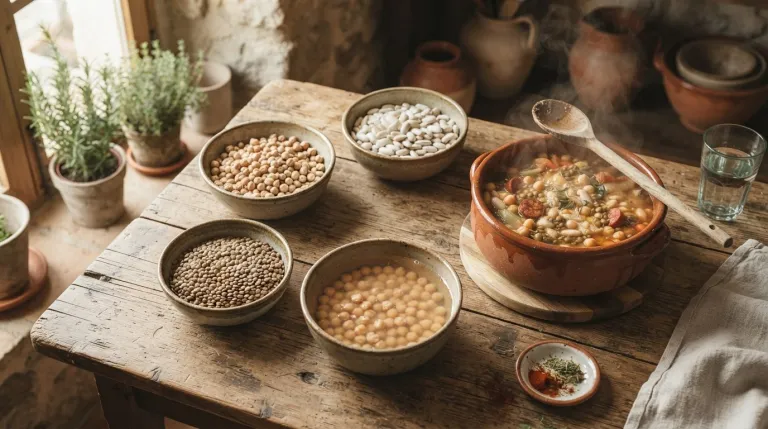
Pulses from start to finish: soaking, cooking and storing
How long to soak each pulse, how long to cook it in an ordinary pot or a pressure cooker, when to add the salt and how to store it so it lasts all week.
Equipo Cocinoa · 2026-10-23
Cooking techniques
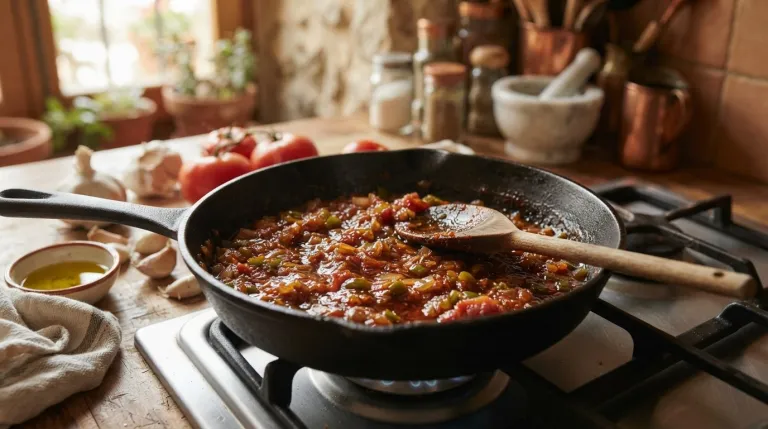
Sofrito: how to get the foundation of Spanish cooking right
Timing, heat and the order of the ingredients for a sofrito that really brings flavour: softened or caramelised onion, well-reduced tomato and how to store it.
Equipo Cocinoa · 2026-10-23
Cooking techniques
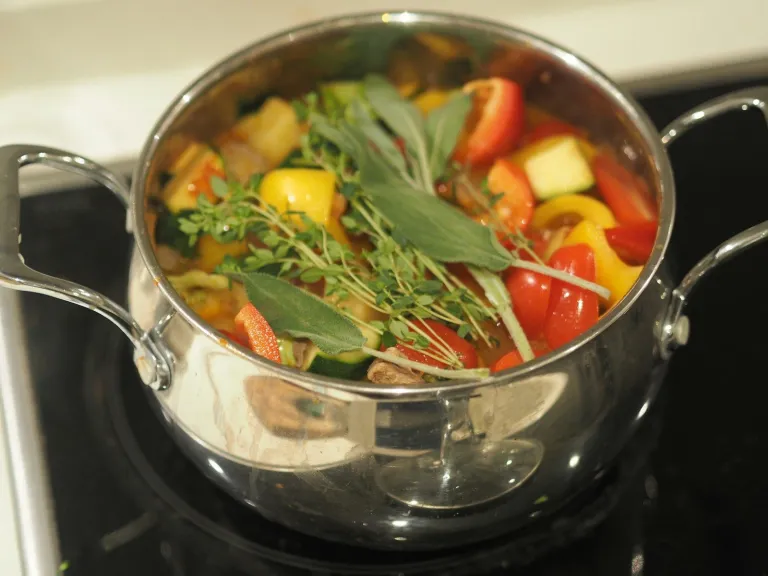
Homemade stocks and broths: chicken, vegetable and fish
Which bones and vegetables to use, how long to simmer each stock, how to skim off the fat and how to freeze it in portions so you always have some to hand.
Equipo Cocinoa · 2026-10-23