Cooking techniques
Eggs done just right: boiled, poached, scrambled and in an omelette
The minutes for each boiled-egg texture, how to poach without the egg falling apart, creamy scrambled eggs, a juicy Spanish omelette and what you should know about freshness and safety.
By Equipo Cocinoa · 2026-10-23
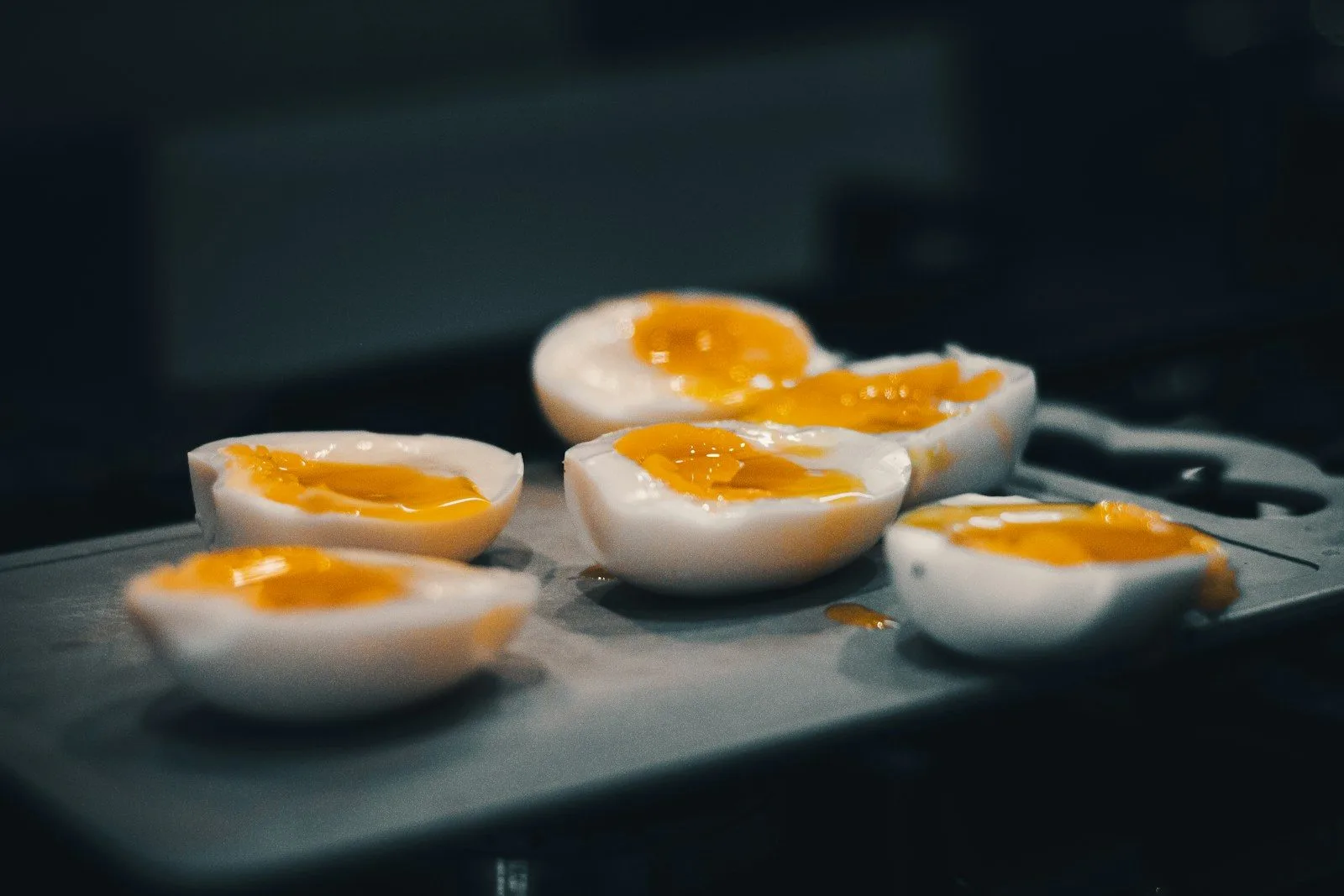
An egg seems like the easiest thing in the world until the yolk turns grey, the poached egg becomes a cloud of wispy threads or the omelette breaks as you flip it. With a few clear timings and techniques, each method turns out just as well every time.
Before you cook: size, freshness and storage
- Size changes the timings. In Europe eggs are graded S (under 53 g), M (53 to 63 g), L (63 to 73 g) and XL (73 g or more). The timings in this guide are for L eggs straight from the fridge; for M, take off about 30 seconds.
- The code printed on the shell starts with a number that tells you how the hens were kept: 0 organic, 1 free-range, 2 barn and 3 caged.
- Respect the best-before date on the box and, the fresher they are, the better for poaching or frying.
- The glass-of-water test: a very fresh egg lies flat on the bottom; an older one tilts or stands on end, because its air cell has grown. If it floats, throw it away.
- When you crack it: in a fresh egg the yolk sits high and domed and the thick white stays gathered around it. If the white spreads out like water, the egg is getting on.
At home, keep them in the fridge, in their box, on an inside shelf rather than in the door, where the temperature changes every time you open it. Don't wash them before storing them: the shell has a natural protective coating. If one is dirty, clean it just before you use it. And throw away any with broken or cracked shells.
Boiled eggs: the minutes for each texture
The most reliable method is to start with water that's already boiling, so the timing doesn't depend on how long your hob takes to heat it:
- Bring enough water to the boil to cover the eggs.
- Lower them in gently with a spoon, one at a time.
- Keep it at a gentle boil and start timing.
- Transfer them to a bowl of iced water, or very cold water, for 2 or 3 minutes. This stops the cooking and makes them easier to peel.
Timings for L eggs straight from the fridge:
- 5–6 minutes: set white and runny yolk, for dipping bread.
- 7 minutes: jammy yolk, like a thick marmalade. Perfect for salads or on top of some vegetables.
- 9 minutes: yolk almost set, with the centre still soft.
- 10–11 minutes: hard-boiled, with a set, deep-yellow yolk.
Go past 12 minutes and a greenish ring appears around the yolk, along with a slight smell of sulphur. It isn't dangerous, just a sign that the egg has been overcooked.
To peel them without mangling them, tap the wide end (where the air cell is), roll the egg on the worktop and peel it under a gentle trickle of water. Eggs that are one or two weeks old peel far more easily than freshly laid ones. Hard-boiled eggs keep in the fridge for up to a week in their shells; once peeled, they're best eaten within one or two days.
Poached eggs without the wisps
A poached egg, or poché, is an egg cooked out of its shell in hot water. The key lies in three things: a fresh egg, water that isn't boiling and a little patience.
- Pour about 8 cm of water into a wide pan and heat it until it barely trembles, with small bubbles on the bottom. It shouldn't be at a rolling boil.
- If you like, add a tablespoon of vinegar per litre: it helps the white set sooner.
- Crack the egg into a fine sieve and let it drain for a few seconds: this gets rid of the thinnest part of the white, which is what forms the wisps. Then tip it into a small cup.
- Stir the water to create a gentle whirlpool and slide the egg into the centre from very close to the surface.
- Cook it for 3 minutes for a runny yolk or 4 for a firmer one.
- Lift it out with a slotted spoon, drain it on kitchen paper and trim any ragged edges if you like.
If you're cooking for several people, you can poach them in advance, plunge them into iced water and keep them in the fridge until the next day. To serve, one minute in hot water is all they need.
Creamy scrambled eggs
Good scrambled eggs are creamy and glossy, not dry or watery. The secret is low heat:
- Beat the eggs with the salt just before you cook them.
- Heat a non-stick frying pan over a medium-low heat with a little butter or olive oil.
- Add the eggs and stir constantly with a spatula, drawing them in from the edges to the centre to form large, soft curds.
- Take them off the heat while they're still a little runnier than you like them. The heat of the pan finishes the job on the plate.
If you're adding mushrooms, asparagus or prawns, cook them first and let their liquid evaporate before adding the egg. Otherwise the scrambled eggs will weep.
Fried eggs with crispy, lacy edges
Use a small frying pan with plenty of olive oil, hot but not smoking. Crack the egg onto a plate and slide it into the oil from close to the surface. With a spoon, keep basting the white with the hot oil so it sets on top while the yolk stays runny. In under a minute the white will be cooked and the edges golden and lacy (what Spaniards call puntilla). Drain it briefly on paper before serving.
Spanish omelette (tortilla de patatas)
Quantities for a pan of about 24 cm: 1 kg of potatoes, 6 to 8 L eggs and, if you like it with onion, one medium onion.
- Cook the potatoes gently in oil. Cut them into thin slices or irregular chunks and cook them in plenty of olive oil over a medium heat for 20–25 minutes, until tender but not browned. If you're using onion, add it at the same time. Drain them well; the strained oil can be reused.
- Let the mixture rest. Beat the eggs with salt, add the still-warm potatoes and leave them to rest for 10 or 15 minutes. The potato soaks up the egg and the omelette turns out juicier and more compact.
- Set it over a medium heat. Heat the pan with a tablespoon of oil, pour in the mixture and let it set for 2 or 3 minutes, loosening the edges with a spatula.
- Flip it using a plate larger than the pan, with one quick, confident movement. Slide the omelette back into the pan and set the other side for 1 or 2 minutes.
Less time gives a juicier omelette; more time, a firmer one. The most common mistakes:
- It sticks: the pan wasn't hot enough or it needed more oil.
- It breaks when you flip it: you didn't wait for the edges to set.
- It's dry: too long on the heat, or the potatoes were fried crisp instead of cooked gently.
Egg safety
- Crack eggs on a flat surface or into a separate bowl, not on the rim of the bowl you're going to beat them in, and don't separate yolks using the shell itself.
- Wash your hands after handling raw eggs.
- Dishes made with raw or barely set egg, such as homemade mayonnaise, tiramisu or a very runny omelette, should be kept in the fridge and eaten soon: homemade mayonnaise, on the same day.
- Pregnant women, babies and young children, older people and anyone with a weakened immune system should eat eggs that are fully set, or use pasteurised egg in raw preparations.
- Don't leave egg dishes at room temperature for more than two hours.
Recipes to practise with
- Huevos rotos with jamón, to practise those crispy edges.
- Scrambled eggs with wild mushrooms, creamy and in season in autumn.
- Scrambled eggs with wild asparagus, for spring.
- Huevos a la flamenca, with the eggs baked in the oven.
- Egg flan, eggs in sweet form.
For information only. It does not replace advice from a health professional.
More posts
Cooking techniques
Pulses from start to finish: soaking, cooking and storing
How long to soak each pulse, how long to cook it in an ordinary pot or a pressure cooker, when to add the salt and how to store it so it lasts all week.
Equipo Cocinoa · 2026-10-23
Cooking techniques
Sofrito: how to get the foundation of Spanish cooking right
Timing, heat and the order of the ingredients for a sofrito that really brings flavour: softened or caramelised onion, well-reduced tomato and how to store it.
Equipo Cocinoa · 2026-10-23
Cooking techniques
Dry, creamy or soupy rice: ratios, timings and common mistakes
Which variety to choose, how much stock each style of rice needs, paella pan or casserole, how to get the socarrat and how to store leftover rice safely.
Equipo Cocinoa · 2026-10-23